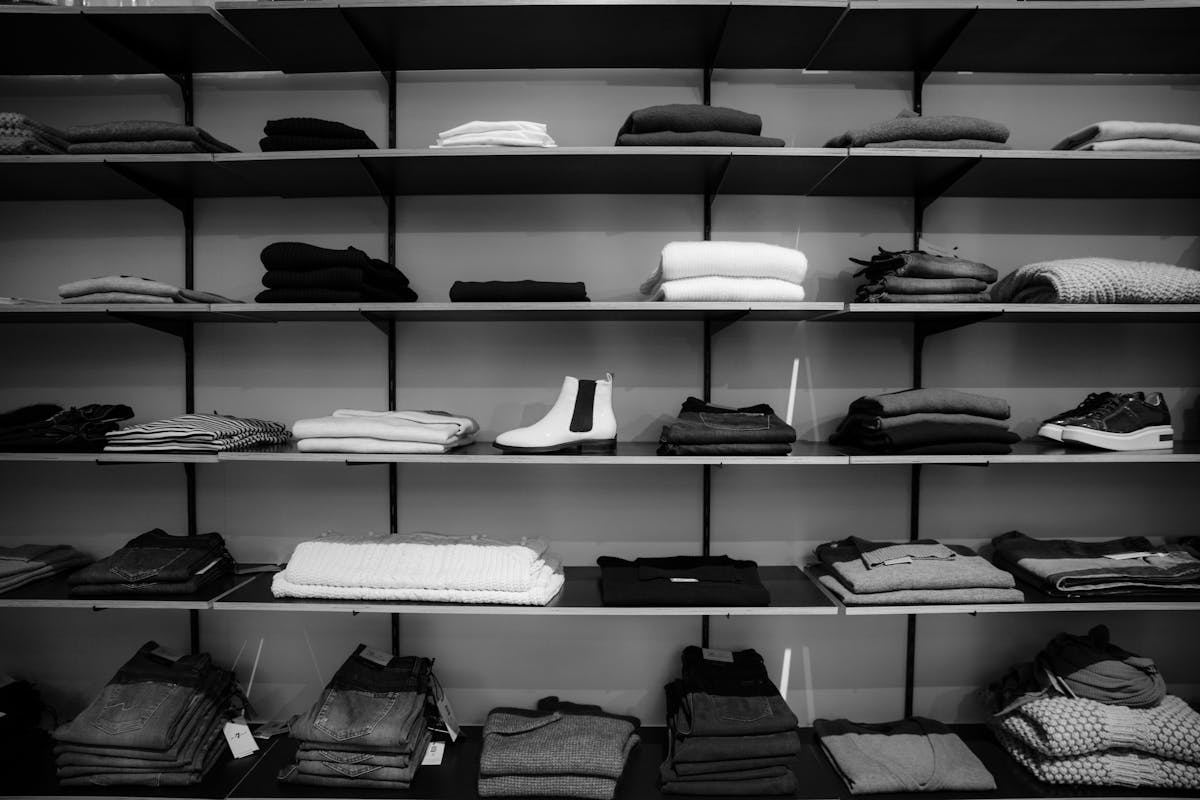
The fashion lookbook has been a sacred ritual for as long as the industry has existed. Twice a year (at minimum), brands invest heavily in producing these curated visual collections — a blend of editorial photography, styling vision, and brand storytelling that announces each new season. A single lookbook shoot for a mid-size fashion brand typically costs $15,000-50,000 when factoring in photographer, models, stylist, hair and makeup, location, and post-production.
In 2026, a growing number of brands are producing lookbooks entirely or partially with AI. And the results are challenging fundamental assumptions about what fashion content requires.
What an AI-Generated Lookbook Actually Looks Like
The misconception is that AI lookbooks look like AI. Early attempts did — awkward poses, impossible fabric physics, uncanny valley faces. But current-generation AI image models have crossed a quality threshold that makes the output genuinely competitive with mid-tier fashion photography.
Here is the typical workflow for an AI-generated lookbook:
- Product photography: Each garment is photographed flat or on a simple hanger — a 30-minute process for an entire collection
- Scene definition: The brand selects environments, lighting moods, and styling contexts that match their brand identity
- AI generation: Each product image is processed through an AI model that generates the garment in the selected scenes, optionally on AI-generated models in appropriate poses
- Curation: The brand’s creative director reviews outputs and selects the strongest images
- Light retouching: Minor adjustments for color accuracy and consistency across the collection
The entire process takes 1-3 days versus 2-4 weeks for a traditional lookbook. The cost difference is even more dramatic: $200-500 in AI credits versus $15,000-50,000 for traditional production.
Who Is Actually Doing This
The brands producing AI lookbooks fall into three categories:
Emerging Direct-to-Consumer Brands
Startups launching with 20-50 SKUs that cannot justify a $30,000 lookbook investment before generating revenue. For these brands, AI lookbooks are not a compromise — they are the only economically viable option. Tools like PixelPanda enable them to produce professional-quality lookbook imagery at startup-friendly budgets.
Fast Fashion and Volume Retailers
Brands launching hundreds of new styles weekly cannot shoot traditional lookbooks for everything. AI enables them to produce consistent, professional imagery at the velocity their business model demands. This is less about cost savings and more about physical impossibility — you cannot book enough photographers and models to shoot 500 new styles per week.
Established Brands Supplementing Traditional Shoots
Interesting trend: several established brands are using AI-generated lookbooks for secondary collections, capsule drops, and pre-launch marketing while maintaining traditional photography for their main seasonal campaigns. The AI lookbook serves as a preview or teaser, with traditional photography used for the definitive campaign imagery.
The Quality Question
Let us be specific about what AI can and cannot deliver in lookbook photography:
What AI Handles Well
- Standard silhouettes: Dresses, tops, pants, outerwear in conventional cuts look excellent in AI-generated imagery
- Clean studio looks: Solid backgrounds, controlled lighting, classic fashion photography aesthetics
- Lifestyle contexts: Products shown in everyday settings — coffee shops, streets, offices — with natural-looking environmental integration
- Consistent brand aesthetic: Once you dial in the visual parameters, AI delivers remarkably consistent results across an entire collection
Where AI Still Struggles
- Fabric physics: Heavy draping, flowing chiffon, and structured tailoring are sometimes interpreted incorrectly by AI models
- Avant-garde designs: Unconventional construction, architectural shapes, and experimental fashion challenges AI models trained primarily on conventional garments
- Emotional resonance: The best fashion photography captures a mood, a moment, a feeling. AI generates technically competent images that can lack the ineffable quality that distinguishes good fashion photography from great fashion photography
- Hand and detail shots: Close-ups of fabric texture, button details, stitching quality, and other tactile elements are better captured through traditional photography
The Business Case in Numbers
For a brand producing quarterly lookbooks with a 40-piece collection:
| Cost Category | Traditional (Annual) | AI-Generated (Annual) |
|---|---|---|
| Photography/Generation | $60,000-200,000 | $800-2,000 |
| Models | $20,000-40,000 | $0 |
| Styling/Creative Direction | $15,000-30,000 | $5,000-10,000 |
| Post-production | $8,000-15,000 | $1,000-3,000 |
| Timeline per lookbook | 2-4 weeks | 1-3 days |
| Annual Total | $103,000-285,000 | $6,800-15,000 |
Note that creative direction costs remain in the AI column. Someone with taste and brand knowledge still needs to define the visual direction and curate the output. AI reduces production costs, not creative leadership costs. Brands that try to eliminate creative direction entirely produce bland, generic lookbooks regardless of the tool.
Industry Reaction
Responses to AI lookbooks vary predictably by segment:
Luxury fashion remains firmly committed to traditional photography. When your average garment retails for $2,000+, the photography budget is a rounding error, and the editorial process is part of the brand experience. For now, AI lookbooks are a non-factor in luxury.
Contemporary and mid-market brands are the fastest adopters. The pressure to produce more content across more channels with stable or shrinking budgets makes AI an obvious solution. These brands are experimenting actively, with many producing hybrid lookbooks.
Emerging and independent brands are the most enthusiastic adopters because the alternative is no lookbook at all. When your entire marketing budget is $5,000, a $300 AI lookbook is not a compromise — it is liberation.
What This Means Going Forward
AI-generated lookbooks are not replacing fashion photography. They are creating a new tier of fashion content production that did not previously exist — professional-quality visual merchandising that is accessible to brands at every scale.
The smartest brands view AI lookbook tools as an expansion of their creative capabilities, not a replacement for their existing ones. You can now produce lookbook-quality imagery for every capsule collection, every color drop, every limited edition — content that previously would not have justified a traditional shoot. More visual content, produced faster, at lower cost, reaching more customers.
The fashion lookbook is not dying. It is becoming accessible to everyone.